If you’ve decided to invest in a concrete garage floor, a concrete patio, or even a concrete driveway, congratulations! You’re taking a huge leap forward in customizing your home and truly making it yours. And because concrete can last for decades when properly cared for, it’s a worthwhile investment.
Even if you’ve already decided, you may not be aware of all the customization options available. Concrete doesn’t have to look like the traditional concrete we see around town. In fact, countless colors, textures, and designs are available.
The sky’s the limit when it comes to concrete customization! Of course, that also means it can be hard to stay informed about all your options.
Creative Concrete, the Twin Cities’ premier stamped concrete contractor, hopes to make the research process easier by comparing two common concrete options, stamped and textured, below — and we’ve updated this guide for 2026 with current pricing, trending patterns, and maintenance tips.
Stamped Concrete
Stamped concrete is aptly named. To create a stamped concrete patio, garage floor, pool deck, or anything in between, the residential concrete contractor first lays the concrete in slabs.
Using what is essentially a giant stamp with the look of an individual stone or tile pattern, our team imprints the concrete with a design before it has fully dried.
Stamped concrete has made its mark in the home renovation industry. Modern innovation has used this technique, creating concrete designs that look like everything from brick to cobblestone.
Its ease of application and affordability make it easy for homeowners everywhere to own expensive-looking patios, garage floors, and pool decks.
What Are The Benefits Of Stamped Concrete?
Materials like brick, cobblestone, wood, and stone are more susceptible to the environment, giving them a shorter lifespan. Stamped concrete is not only aesthetically pleasing; it’s highly durable — with proper sealing and maintenance, a well-installed stamped concrete surface can last 20 to 25 years or more, and it stands up to heavy machinery and impacts far better than pavers, brick, or wood.
The material is also more frost-resistant because there are fewer individual interlocking pieces than bricks or pavers. Fewer seams and pieces also mean less grass and weeds growing through the cracks, saving you time and money.
Stamped Concrete Patterns & Color Trends For 2026
If you’re planning a project this year, here’s what’s trending in stamped concrete design:
- Ashlar slate — a clean, structured rectangular pattern that works with both modern and traditional homes.
- Wood plank — replicates natural wood grain for rustic outdoor living spaces, without the upkeep real wood demands.
- Herringbone brick — an interlocking layout that adds visual movement and pairs well with craftsman or historic-style homes, especially on driveways.
- Seamless stone texture — a natural, joint-free rock look that’s slip-resistant, making it a popular pick for pool decks.
- Large flagstone — organic, free-form shapes that blend naturally into landscaping.
On the color side, earth tones remain a steady favorite, while gray and charcoal finishes are gaining ground for homeowners after a more modern, understated look. See our full Patterns & Textures and Color Choices pages for more inspiration, or check out our guide to picking a color of stamped concrete.
Textured Concrete
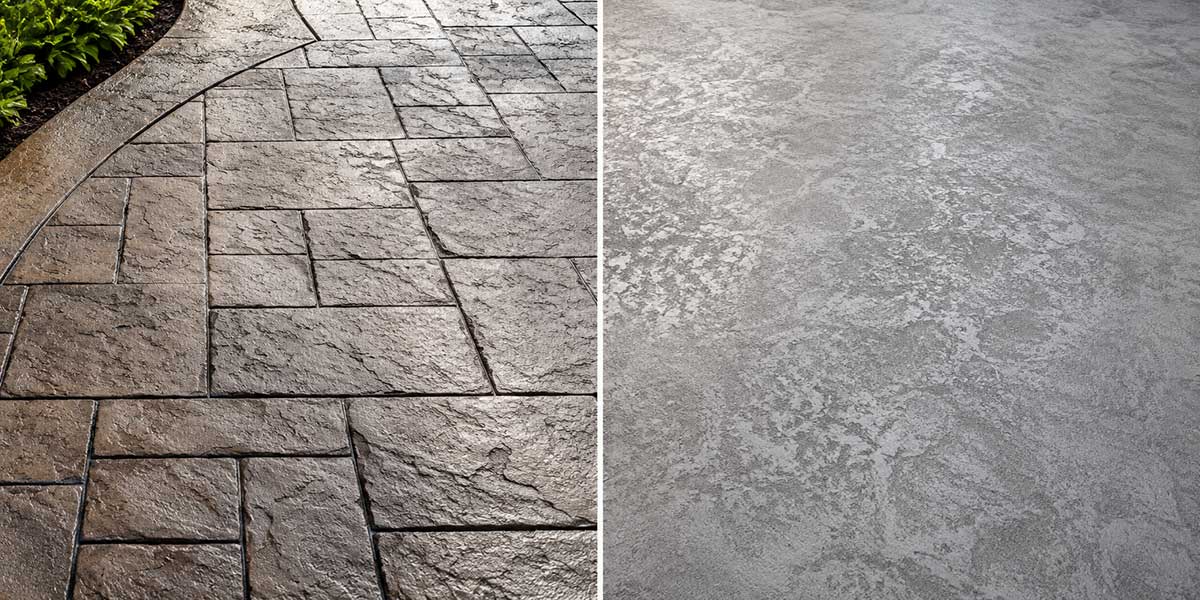
Textured concrete is similar to stamped concrete, though not identical. Like stamped concrete, it involves pouring concrete and imprinting a design before the material has completely dried.
Textured concrete can mimic naturally occurring materials such as stone. However, textured concrete patterns look more irregular than stamped concrete and go well with other materials.
There are multiple styles, including granite and Belgian slate, and you can add an extra touch with colors like hazelnut or tawny for a unique, beautiful finish.
What Are The Benefits Of Textured Concrete?
Textured concrete is just as strong as stamped concrete but has the appearance of a singular unit instead of the many smaller “units” that compose stamped concrete. It’s a great fit if you want the durability of concrete with a more organic, one-piece look. Additional advantages include:
- Adds style and design to your concrete surface, helping it stand out from your neighbors.
- Can be designed explicitly for any aesthetic you’re looking for.
- Offers a durable, long-lasting option with minimal maintenance.
- Costs less than alternatives like wood or traditional pavers.
Stamped Vs. Textured Concrete: Cost Comparison
Cost is one of the first questions most homeowners ask, so here’s a general breakdown for 2026:
- Basic stamped concrete (single pattern, one color): roughly $10–$14 per square foot.
- Mid-range stamped concrete (borders, contrasting colors, multiple patterns): roughly $14–$20 per square foot.
- High-end stamped concrete (multiple patterns, hand-applied color, custom detail): $20+ per square foot.
- Textured concrete typically falls in a similar range to stamped concrete, often landing toward the lower-to-mid end since it doesn’t require a full stamp pattern — though exact pricing depends on the texture technique and finish you choose.
- For comparison: natural pavers generally run $10–$23 per square foot installed, and traditional plain concrete is the least expensive option but offers none of the design flexibility.
Bottom line: both stamped and textured concrete are typically competitive with, or cheaper than, natural stone, brick, or paver installations of similar quality, because pouring and finishing a slab requires less labor than placing individual units by hand. Your exact price will depend on square footage, pattern complexity, color work, and site prep. Contact us for a free quote specific to your project.
Caring For Your Stamped Or Textured Concrete
Both options are low-maintenance compared to brick, pavers, or wood, but a little upkeep goes a long way toward hitting that 20-to-25-year lifespan:
- Reseal every 3 to 5 years to protect against moisture, staining, and UV fading.
- Rinse off de-icing salt as soon as possible in the winter — salt residue can discolor and pit the surface over time.
- Pressure wash annually to remove dirt, algae, and debris before they cause staining.
- Clean up spills promptly, especially oil, grease, and acidic substances like fertilizer.
Still Confused? Creative Concrete Is Here To Help
The definition of these terms is not hard and fast, and some professionals will even use them interchangeably. We’re one of the most straightforward New Brighton concrete companies around, and our 5-star rating speaks for itself!
Frequently Asked Questions
Which lasts longer, stamped or textured concrete?
Both are made from the same durable concrete base and, with proper sealing and care, can last 20 to 25 years or more. The finish technique affects appearance more than lifespan — proper installation, sealing, and maintenance matter more than which style you choose.
Is textured concrete cheaper than stamped concrete?
Textured concrete is often slightly less expensive than a highly detailed stamped pattern, since it doesn’t require multi-step stamping, but the difference is usually modest. Your contractor can give you an exact comparison based on your design.
Can I combine stamped and textured concrete on the same project?
Yes — many homeowners use stamped concrete as a border or accent and textured concrete for the main field (or vice versa) to create visual contrast within a single patio, driveway, or pool deck.
Do I need to reseal stamped or textured concrete every year?
No — most sealants last 3 to 5 years under normal conditions. Harsh winters, heavy foot traffic, or a lot of direct sun exposure may shorten that window, so it’s worth having your contractor inspect the sealant periodically.
For answers to any concrete questions you may have, contact Creative Concrete online today or call us at 612-414-7932.